so you wanna contribute to open source?
november 6, 2026
none of this came from a guide. it came from opening a pr and finding out halfway through that i'd done three things wrong, then not doing them again. some of it i learned from maintainers being patient with me, some from a closed pr and no explanation. here's what stuck.
learn the git workflow first
before you touch anyone's repo, make sure you can branch, sync with upstream, fix a merge conflict and rebase without panicking.
you will hit a merge conflict. it's not a sign you broke something, it's normal. but if your first one happens inside a pr you already opened, it's a much worse place to learn.
git clone https://github.com/<your-username>/<repo>.git
cd <repo>
git remote add upstream https://github.com/<owner>/<repo>.git
git checkout -b fix/describe-your-change
# make your edits
git add .
git commit -m "fix: describe what changed"
git push origin fix/describe-your-change
keep your branch current before opening the pr:
git fetch upstream
git rebase upstream/main
git push --force-with-lease
--force-with-lease is safer than --force because it refuses to overwrite the remote branch if someone else pushed to it since your last fetch.
read contributing.md and ai-policy.md first
every repo has a CONTRIBUTING.md, and increasingly an AI_POLICY.md. read both before you start. they tell you how branches should be named, what the pr description needs, whether tests are expected, and how to claim an issue. skipping this is the fastest way to get a pr closed without comment.
the ai policy matters more now than it used to. most orgs aren't banning ai assistance, they're setting rules for how it's used and disclosed.
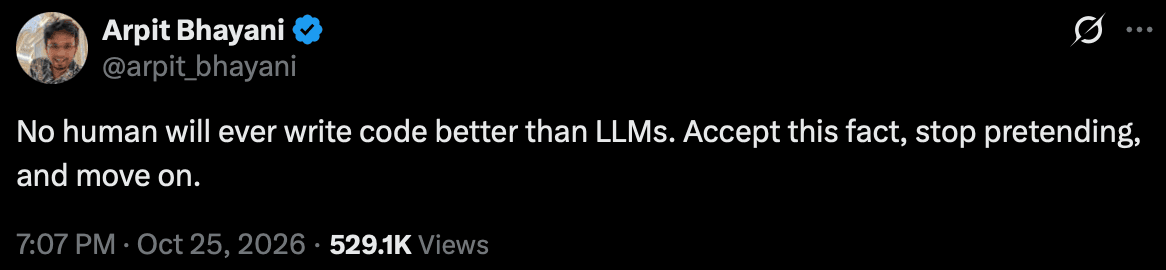
using ai to help is fine. submitting unreviewed ai output as if you wrote it is how you get a pr rejected and a maintainer annoyed. the part people skip is that "you still have to understand the issue" before you can judge whether the llm's fix is the right one. if you can't explain your diff line by line, it isn't ready. maintainers can tell the difference between a considered fix and a guess.
some repos also run review bots that comment on your pr before a human even opens it. coderabbit is the common one. none of that replaces you running the tests locally. if you didn't run it, don't open it.
start with good first issue labels
don't chase hard issues or issues you don't understand. you'll spend three days stuck, give up, and decide open source isn't for you.
start with good first issue. that label is a maintainer telling you, in public, that this one is approachable. a couple of those merged is what builds the confidence to attempt something bigger.
and talk to the maintainers. they do want to help. a specific question in the issue thread ("i'm trying to do x, i've tried y, here's the error") gets answered. disappearing for a week and silently closing the pr does not.
wait to be assigned, and don't ping
comment on the issue, say you'd like to take it, and wait to be assigned before writing the fix. opening a pr for an issue you were never assigned is how people get banned from an org, and it's the standard outcome, not a rare one.
in most of my owasp contributions i hardly ever tagged a maintainer. i'd leave a message and they'd reply when they had time. pinging every day doesn't move you up the queue, it moves you down. if it's been quiet for a week, one polite reminder is fine. one.
have patience
this is where most people quit. they assume a merge takes a day or two, and when nothing happens they decide they're being ignored.
some of my prs sat for about 15 days before anyone replied. i didn't ping in that time, i left it, and eventually left a single reminder.
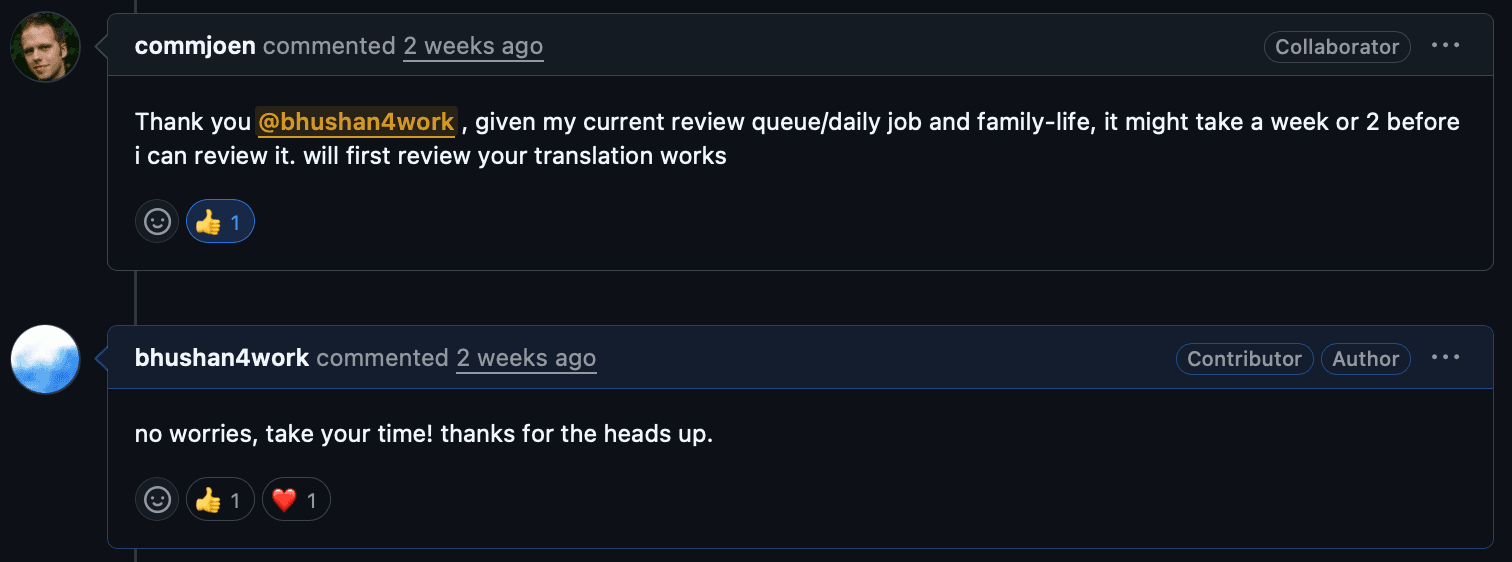
that gap isn't neglect. it's what a volunteer review queue looks like.
join the community
join the org's slack or discord and sit in it. follow the maintainers on twitter or linkedin, they post about the project there more than you'd expect. this moves you from a stranger who opened a pr to someone visibly interested in the project, and maintainers notice that.
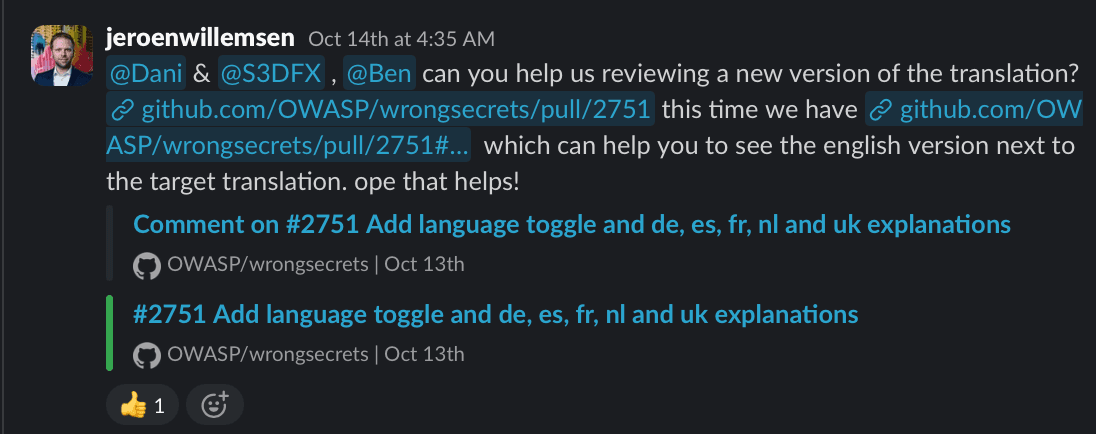

it's how OWASP/wrongsecrets#2442 happened for me. it's a translation issue that needed multiple rounds of review, and it's still in progress with several people looking at it. because i already followed the project lead, he dmed me about his plans for the repo and what he wanted to do next.
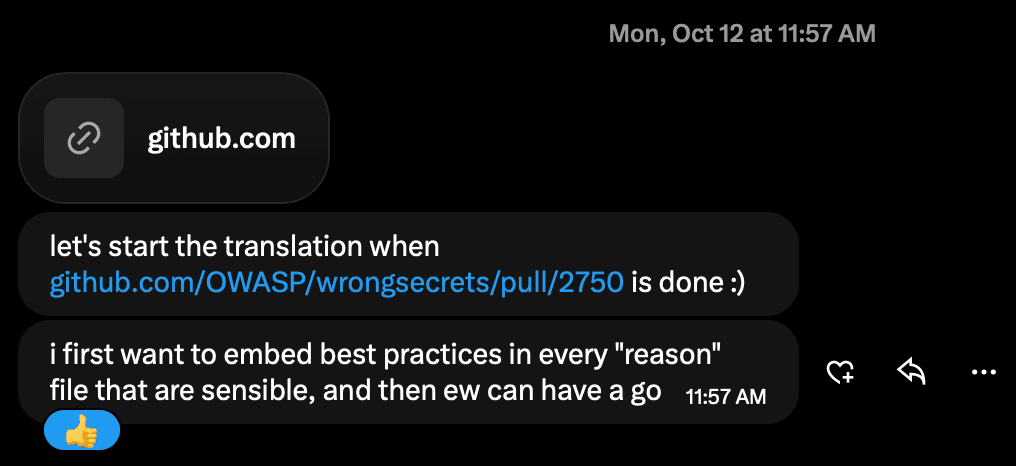
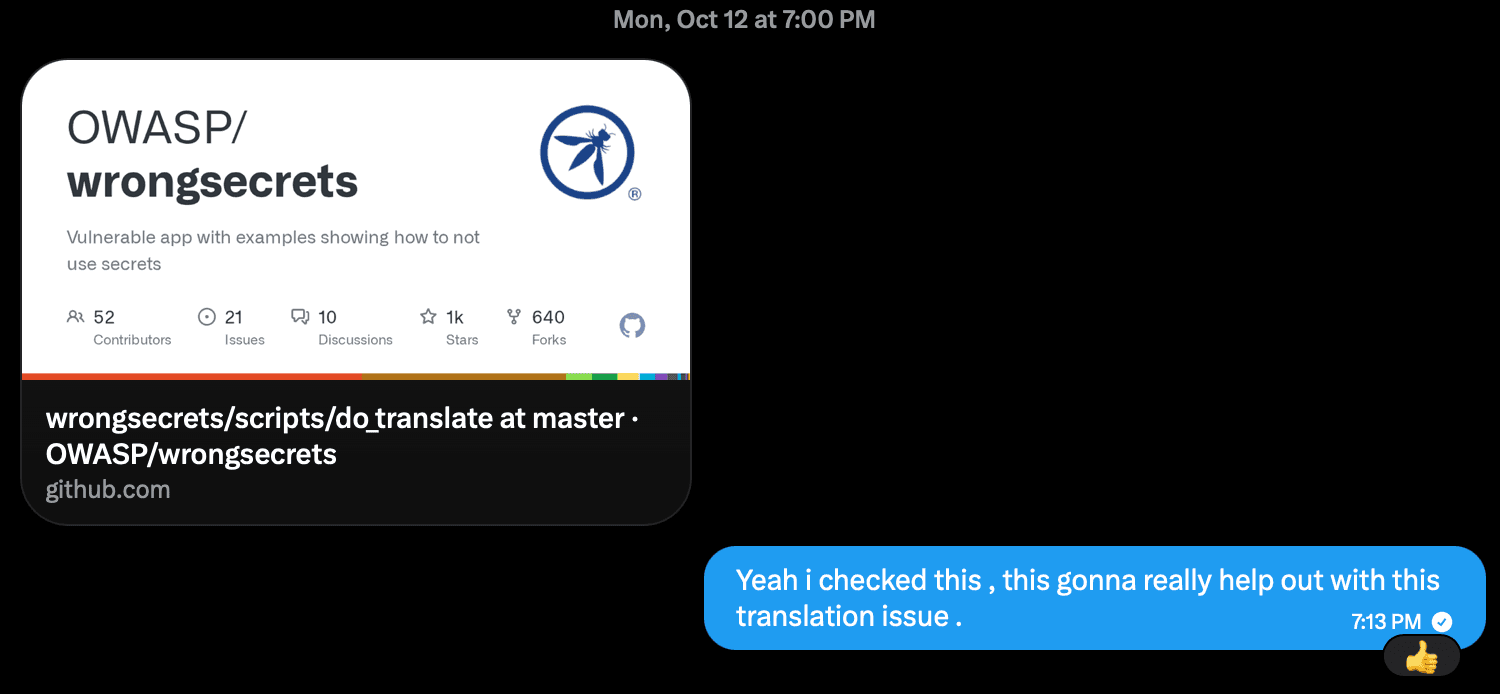

that's where you find out what's planned for the next release, which issues they want fixed early, and where your opinion is actually useful.
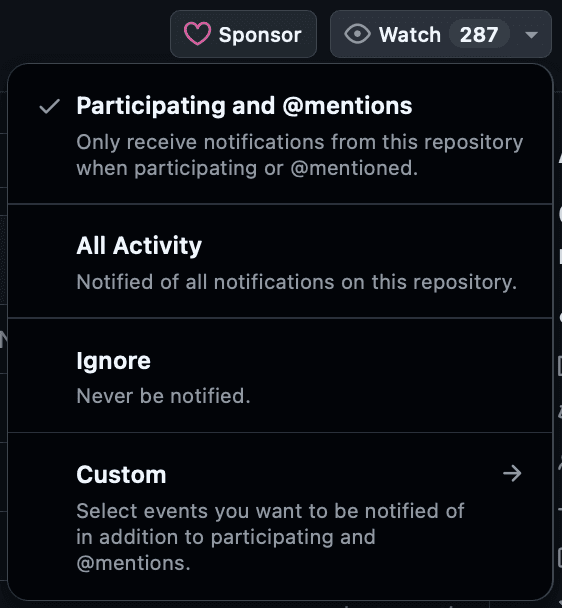
turn on the watch setting for repos you care about too, so you get notified instead of checking manually.
review, and pick issues that matter
if you weren't assigned anything, review other people's open prs before a maintainer gets to them. it makes their job easier and they'll say so. worst case you leave a comment they disagree with, which is a conversation, not a problem.
and it doesn't matter how many prs you got merged. what matters is what you learned and whether the fix mattered. documentation prs are fine and they help, but nobody cares that you got one merged. choose the issues worth your time.
reach out to people who've been there
besides the org's channels, message people who already contributed to the repo. they know things no model will tell you. when i found owasp i was completely lost, and i came across kaif, a gsoc'26 contributor under the same org. i sent him a dm and he guided me through it.
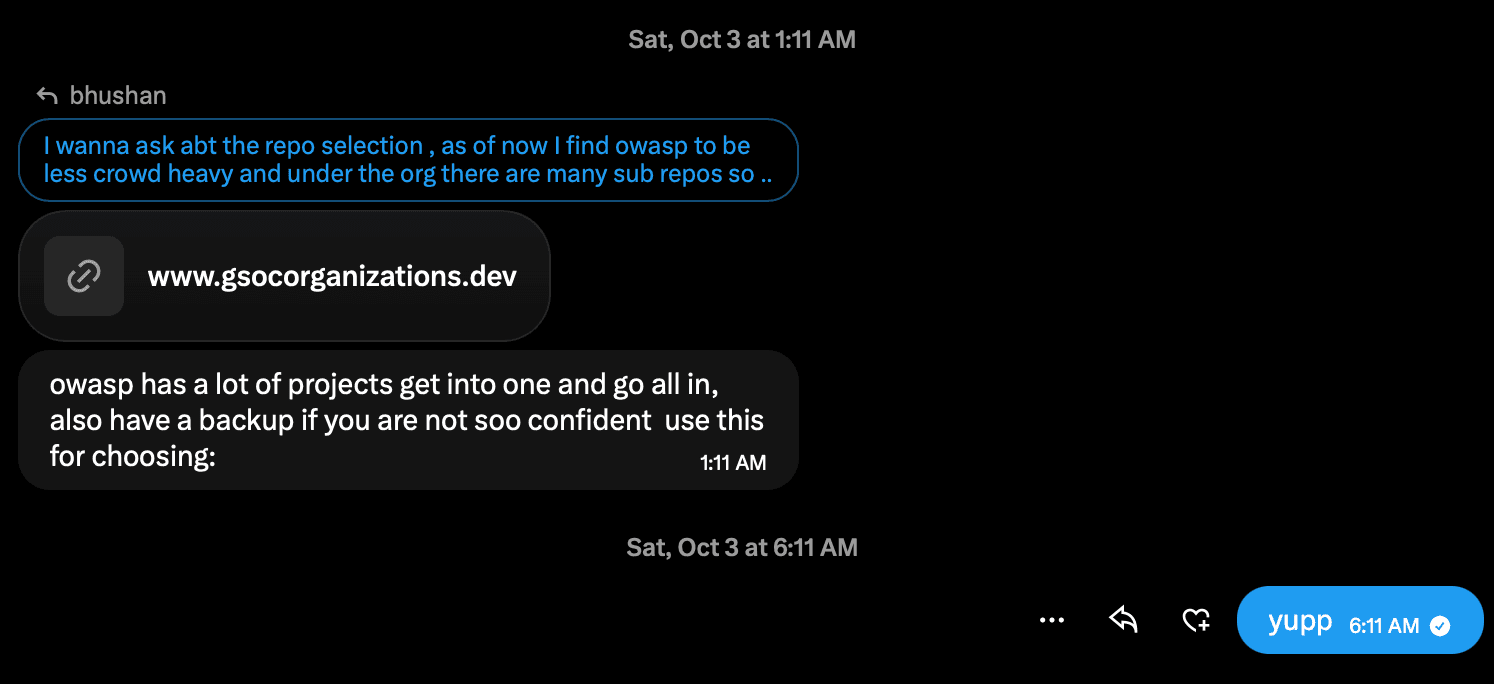
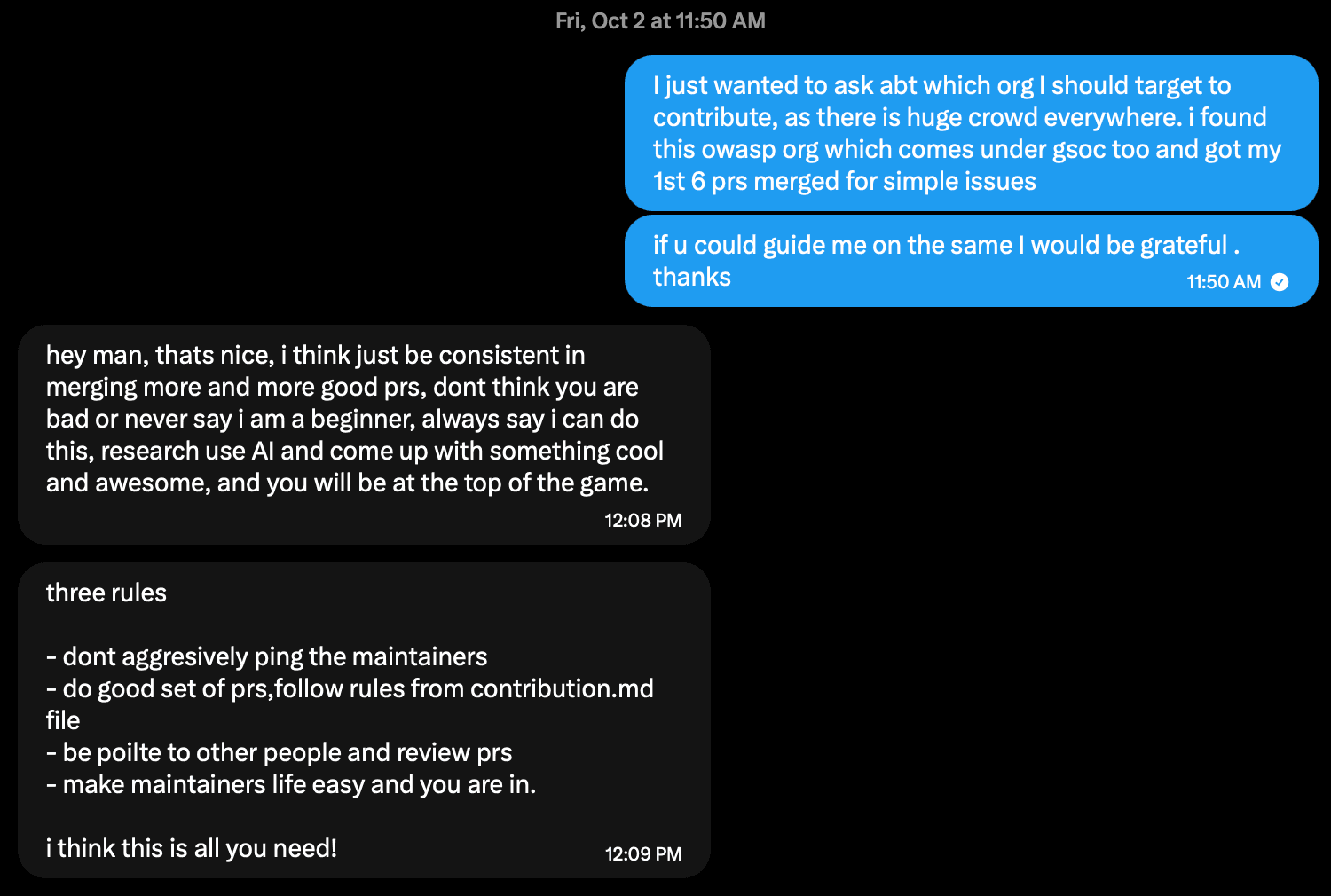
he'd worked in that org. that's a different kind of answer than what gpt would give you.
what actually came out of it
i'm not going to dress this up with numbers i didn't track. my first pr got merged, then i kept going in the same repo, then moved into other owasp repos with active maintainers. late september i shipped 60+ prs in codercops for hacktoberfest 2026. if you want to know what i actually shipped across that run and what it looked like from the inside, i wrote it all up in how i shipped 67 prs to @codercops for hacktoberfest 2026.
the thing i actually got out of it wasn't the merge count. it was that i can now walk into an unfamiliar repo, read the contributing guide, find an issue i can realistically handle, and ship something a maintainer will accept. that transfers to every repo i touch from here.
if you're starting now
- learn the git workflow before you need it. branch, rebase, resolve a conflict on your own repo first.
- read
CONTRIBUTING.mdandAI_POLICY.mdbefore you write anything. - start with
good first issue. confidence comes from merged prs, not ambitious ones. - comment on the issue, get assigned, then write the fix.
- don't ping daily. one reminder after a week is plenty.
- run the tests locally before you open the pr.
- join the community channel and follow the maintainers.
- review other prs when you have nothing assigned.
- stay in one org long enough to learn its conventions.
- pick issues that matter over issues that are easy.
finding a repo is the real mess. there's no clean way through it. you open repos, read issues, close tabs, and eventually one clicks. it's all fuck around and find out.
last thing
the reply i got within a day on my first issue is the reason i kept going. not the merge, not the pr count, but the fact that someone on the other end of a huge security project answered a beginner like it was a normal thing to do.
if you have a repo open in another tab right now, comment on the issue. that's the whole first step. you'll get something wrong somewhere along the way and it won't matter.